Annex 1 Compliance with Rapid-C+

Expert Focus: Annex 1 Compliance with Rapid-C+

Annex 1 Compliance with Rapid-C+

With the revised EU GMP Annex 1 coming into effect on August 25, 2023, the expectations for sterile medicinal product manufacturing have become more stringent and clearly defined. One key requirement is the implementation of continuous microbiological monitoring in critical areas of the filling process – typically Grade A and, in some cases, Grade B environments. Since Annex 1 opens the door or even encourages manufacturers to use alternative or rapid microbiological methods, the implementation of online monitoring systems for controlling both viable and non-viable particles have come into focus.

This article outlines how the Rapid-C+ from Plair, utilizing real-time Biofluorescence Particle Counting (BFPC) technology, can support compliance with these updated requirements by providing continuous, real-time microbiological monitoring for immediate detection and response, offering a practical solution for robust and reliable monitoring in aseptic production and increase process understanding.

How the Rapid-C+ supports key Annex 1 requirements

The following section highlights some key paragraphs from the revised Annex 1 and demonstrates how the Rapid-C+ supports or enables compliance with these specific requirements in sterile manufacturing environments.

Optimized monitoring systems

§ 2.5 The development of the CCS requires detailed technical and process knowledge. Potential sources of contamination are attributable to microbial and cellular debris (e.g. pyrogen, endotoxin) as well as particulate (e.g. glass and other visible and sub-visible particles).

Elements to be considered within a CCS should include (but are not limited to):

… xiv. Monitoring systems - including an assessment of the feasibility of the introduction of scientifically sound, alternative methods that optimize the detection of environmental contamination.

§ 9.28 The adoption of suitable alternative monitoring systems such as rapid methods should be considered by manufacturers in order to expedite the detection of microbiological contamination issues and to reduce the risk to product. These rapid and automated microbial monitoring methods may be adopted after validation has demonstrated their equivalency or superiority to the established methods.

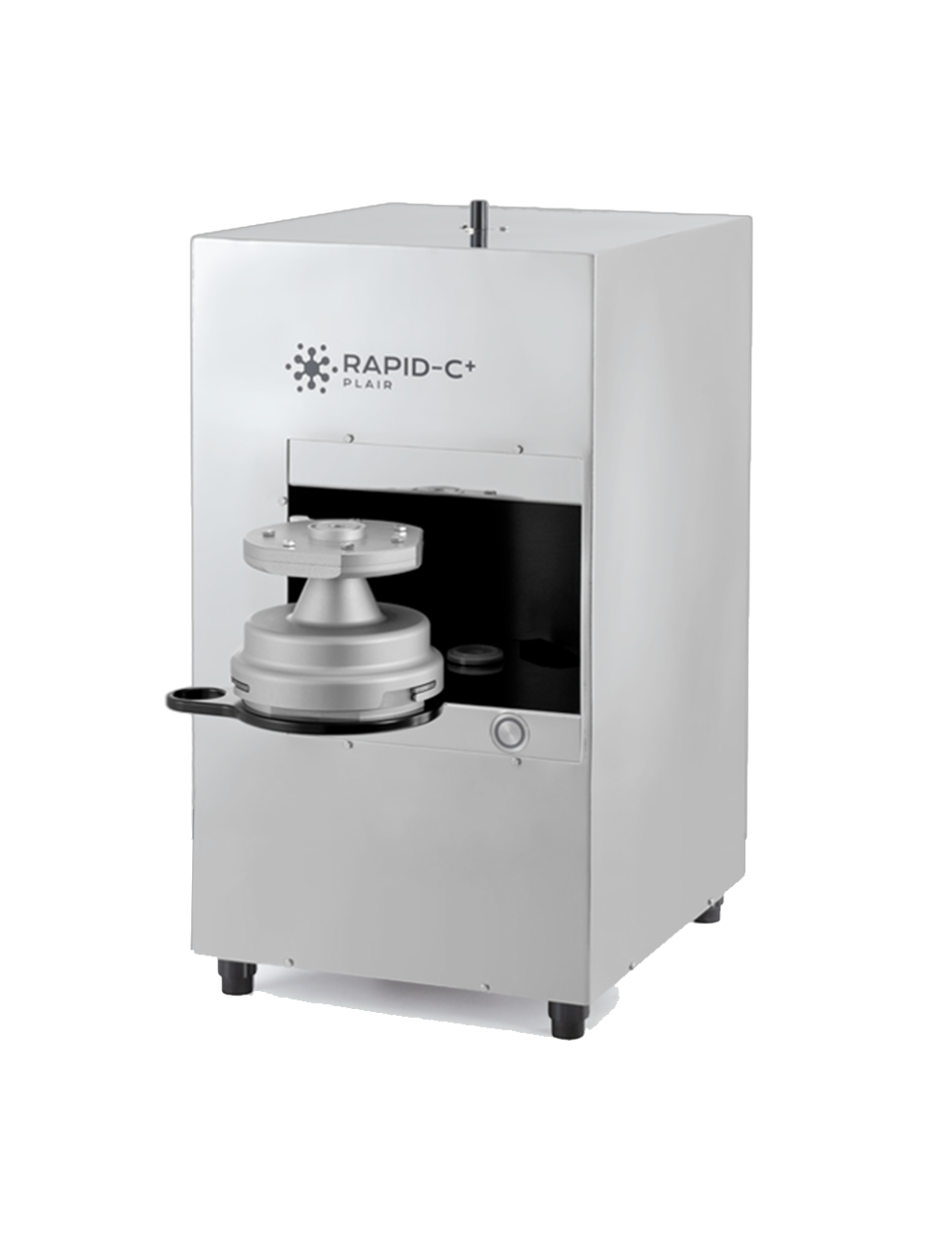
The Rapid-C+ represents a new generation of real-time environmental monitoring systems, designed to meet and exceed modern expectations for rapid microbiological control. Unlike traditional methods that rely on culturing viable microorganisms on agar plates, the Rapid-C+ uses BFPC to continuously detect and characterize airborne biological particles based on their intrinsic fluorescence and scattering properties, in combination with agar plates where the measured air is impacted and microorganisms are collected.

This rapid method significantly shortens the time to result, allowing the detection of potential microbiological contamination within seconds rather than days. Such methods help expedite detection and reduce risk to product quality by enabling immediate intervention in the event of abnormal microbial loads.

Furthermore, the system continuously collects data without the need for manual interventions within grade A environments, thereby reducing the contamination risk associated with operator manipulations.

By integrating Rapid-C+ into the environmental monitoring program, manufacturers can enhance their control over cleanroom environments, strengthen compliance with current regulatory expectations, and pave the way for data-driven, real-time decision-making in aseptic manufacturing.

  • Risk-benefit analysis and user requirement specification (URS)
  • Equipment qualification (IQ and OQ, and on request support for PQ)
  • Comparability testing (correlation to reference methods e.g., active air sampling)

With these validated performance characteristics, the Rapid-C+ provides manufacturers with a scientifically sound, regulatory-aligned alternative for viable particle air monitoring. 

Reduced cross contamination risk by implementing automated methods

§ 9.8 Sampling methods should not pose a risk of contamination to the manufacturing operations.

§ 8.9 Where possible, the use of equipment such as RABS, isolators or other systems, should be considered in order to reduce the need for critical interventions into grade A and to minimize the risk of contamination. Robotics and automation of processes can also be considered to eliminate direct human critical interventions (e.g. dry heat tunnel, automated lyophilizer loading, sterilisation in place).

The Rapid-C+ system is designed for fully automated, continuous microbial air monitoring with no need for human intervention during operation. By eliminating manual sampling steps in grade A, the Rapid-C+ removes one of the most common sources of contamination risk in aseptic environments: human interaction.

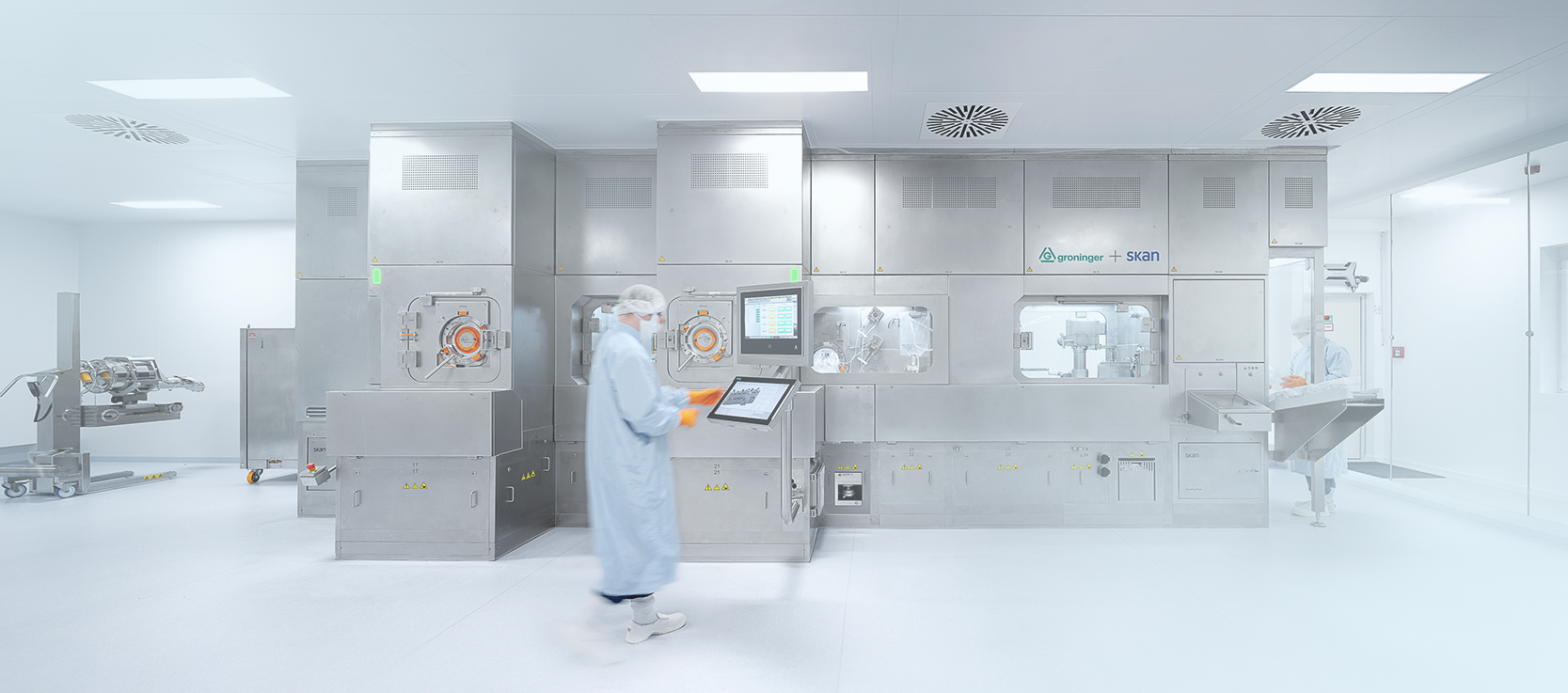
Its non-intrusive design allows the instrument to be integrated into isolators, RABS, or critical Grade A/B environments without disrupting unidirectional airflow or compromising aseptic conditions. Once installed, the system operates continuously and autonomously, reducing both physical interventions in critical zones and associated contamination risks, thereby avoiding any interruption of filling processes.

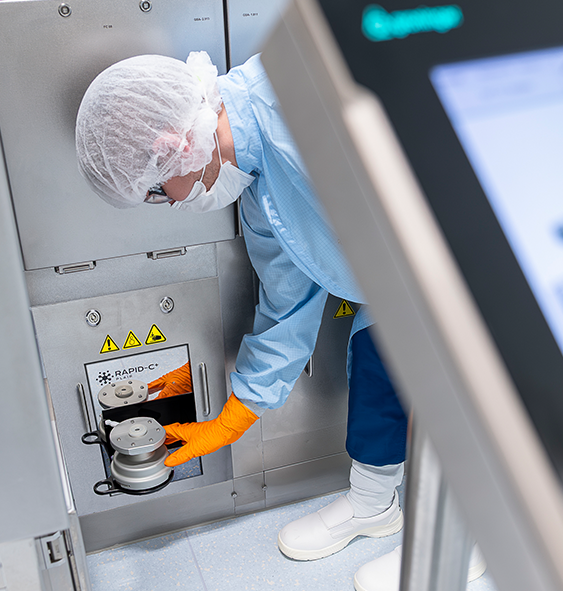
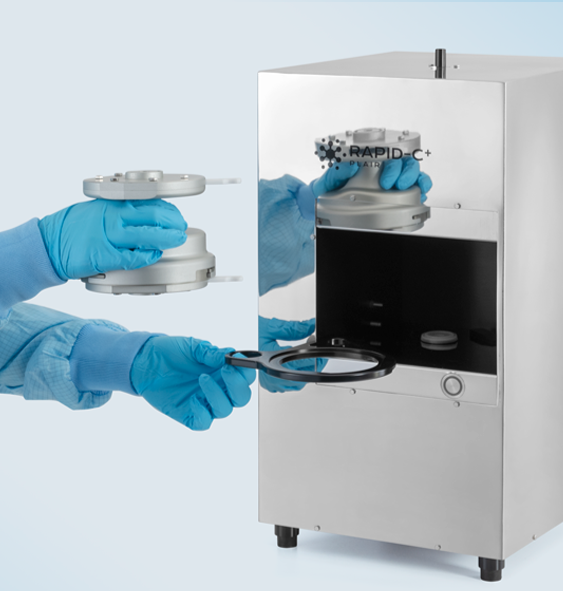
Using the integrated C-Catch (traditional agar impaction system for active air sampling), the agar plate used to collect microbial contaminants is located outside the critical area (e.g., below the filling line), and thanks to the system’s smart design, the C-Catch can be aseptically exchanged without compromising the cleanroom environment and with low risk of secondary contaminations. 

Continuous air monitoring

§ 9.24 Continuous viable air monitoring in grade A (e.g. air sampling or settle plates) should be undertaken for the full duration of critical processing, including equipment (aseptic set-up) assembly and critical processing. A similar approach should be considered for grade B cleanrooms based on the risk of impact on the aseptic processing. The monitoring should be performed in such a way that all interventions, transient events and any system deterioration would be captured and any risk caused by interventions of the monitoring operations is avoided.

Rapid-C+ is specifically designed for true continuous viable air monitoring in critical environments using BFPC technology. This allows uninterrupted detection of viable microorganisms throughout the entire aseptic operation, including equipment setup and critical processing.

Because the system operates without sampling interruptions or manual intervention, it enables full compliance with Annex 1 expectations to capture interventions, transient contamination events, and early signs of system deterioration. All events are recorded with high temporal resolution, allowing manufacturers to pinpoint potential risks to product quality within precise time windows.

In addition, the non-intrusive and closed design of the Rapid-C+ minimizes airflow disturbance and avoids any contamination risk typically associated with manual sampling, plate handling, or operator movement. This makes it particularly suitable for Grade A areas.

Identification of microorganisms

§ 9.31 Microorganisms detected in the grade A and grade B areas should be identified to species level and the potential impact of such microorganisms on product quality (for each batch implicated) and overall state of control should be evaluated. Consideration should also be given to the identification of microorganisms detected in grade C and D areas (for example where action limits or alert levels are exceeded) or following the isolation of organisms that may indicate a loss of control, deterioration in cleanliness or that may be difficult to control such as spore-forming microorganisms and moulds and at a sufficient frequency to maintain a current understanding of the typical flora of these areas.

The BFPC technology of the Rapid-C+ cannot yet directly identify microorganisms to the species level. However, all air sampled during the monitoring is impacted on a traditional agar plate placed in its C-Catch before exiting the device. With this active air sampling using agar plates, any microbial contamination can be captured and, after incubation, identified using current genomics or proteomics methods.  

By continuously monitoring viable particles and distinguishing between biological and non-biological signals, the Rapid-C+ helps users to identify when and where contamination events occur. When there is a signal from the Rapid-C+, the agar plate from the C-Catch is incubated and followed by microbial species identification.

This way, the Rapid-C+ acts as a trigger and early warning system, supporting the microbial identification workflow by providing precise temporal and spatial information. This contributes to the same in depth understanding of the cleanroom’s microbial flora using as traditional growth-based methods.

Real-time results

§ 10.10 Environmental monitoring data and trend data generated for classified areas should be reviewed as part of product batch certification/release. A written procedure should be available that describes the actions to be taken when data from environmental monitoring are found out of trend or exceeding the established limits. For products with short shelf life, the environmental data for the time of manufacture may not be available; in these cases, the compliance should include a review of the most recent available data. Manufacturers of these products should consider the use of rapid/alternative methods.

Unlike conventional air sampling methods that require incubation and delayed analysis, the Rapid-C+ delivers immediate insight into airborne microbial contamination levels via continuous real-time measurement. This capability is particularly valuable during the batch review process, especially for products with short shelf lives, where traditional culture-based data might not yet be available at the time of release. With the Rapid-C+, users can review current and historical contamination trends at the exact time of production, offering a data-rich, proactive assessment of cleanroom conditions during manufacturing.

The system logs all measured events with precise timestamps, enabling fast identification of deviations or "out-of-trend" results and supporting timely investigations. The Rapid-C+ also facilitates risk-based decisions and real-time root cause analysis, helping to streamline environmental monitoring review during batch release.

Rapid-C+ is provided with primary validation and supporting data

§ 10.11 Where rapid and automated microbial methods are used for general manufacturing purposes, these methods should be validated for the product(s) or processes concerned.

§ 9.29 Sampling methods and equipment used should be fully understood and procedures should be in place for the correct operation and interpretation of results obtained. Supporting data for the recovery efficiency of the sampling methods chosen should be available.

The Rapid-C+ is delivered with a comprehensive primary validation package in accordance with Ph. Eur. chapter 5.1.6, USP chapter <1223> or PDA Technical Report #33. The validation includes a robust performance evaluation under controlled conditions, confirming the system’s performance characteristics such as accuracy, precision, specificity, detection limit, and robustness.

To support implementation in GMP-compliant facilities, Plair/MBV provides documentation aligned with regulatory expectations, including:

  • Description of the method
  • Primary validation
  • Risk-benefit analysis and user requirement specification (URS)
  • Equipment qualification (IQ and OQ, and on request support for PQ)
  • Comparability testing (correlation to reference methods e.g., active air sampling)

With these validated performance characteristics, the Rapid-C+ provides manufacturers with a scientifically sound, regulatory-aligned alternative for viable particle air monitoring. 

Cleanroom compliant design

§ 4.5 In cleanrooms and critical zones, all exposed surfaces should be smooth, impervious and unbroken in order to minimize the shedding or accumulation of particles or micro-organisms.

§ 4.7 Materials used in cleanrooms, both in the construction of the room and for items used within the room, should be selected to minimize generation of particles and to permit the repeated application of cleaning, disinfectant and sporicidal agents where used.

The Rapid-C+ has been developed specifically for routine use in GMP-compliant cleanrooms. Its construction adheres to the following cleanroom suitability principles:

  • Smooth and sealed surfaces: The housing of the Rapid-C+ is designed with smooth, non-porous materials that are resistant to microbial adhesion and easy to clean. All external surfaces are free of joints, recesses, or other features that could promote contamination buildup.
  • Low particle emission: The device emits no active airflow into the monitored environment and does not contribute to airborne particle generation. The internal airflow is enclosed, preventing disruption to surrounding laminar flow fields.
  • Material resistance: The system is built using cleanroom-compatible materials (e.g. high-grade stainless steel and chemical-resistant polymers), and has been tested for compatibility with common cleaning, disinfectant, and sporicidal agents.
  • Disinfection and decontamination readiness: All surfaces withstand repeated cleaning cycles using alcohol-based and sporicidal agents. Furthermore, the Rapid-C+ has a specific decontamination mode which can be run during VHP-decontamination, providing a microbe-free instrument ready for measuring right after decontamination.

With its robust design, the Rapid-C+ meets the stringent expectations of Annex 1 for materials and construction within critical manufacturing zones, offering a fully compliant monitoring solution that integrates seamlessly into existing cleaning and disinfection practices.

Equipment description / User manual

§ 5.1 A written, detailed description of the equipment design should be available (including process and instrumentation diagrams as appropriate). This should form part of the initial qualification package and be kept up to date.

The Rapid-C+ is delivered with a comprehensive technical documentation package, which includes :

  • A detailed user manual describing system functionality and operation procedures.
  • Instrumentation schematics for relevant components (e.g., optical system, air intake and exhaust paths, data acquisition units).
  • Guidance on installation, qualification (IQ/OQ), and performance verification in accordance with GMP requirements.
  • Full technical specifications and material information for cleanroom qualification.
  • Primary validation summary according to Ph. Eur. chapter 5.1.6, USP chapter <1223> or PDA Technical Report #33.

This documentation forms an integral part of the system's initial qualification package and supports the validation and GMP integration of the Rapid-C+ in pharmaceutical manufacturing environments. All documents are version-controlled and updated as part of the ongoing lifecycle managemen, ensuring regulatory compliance and traceability.

Conclusions

The Rapid-C+ offers a validated, real-time solution for continuous microbiological air monitoring that aligns with the revised EU GMP Annex 1. Its automated, non-intrusive design supports compliance by reducing contamination risks, enabling immediate detection of viable particles, and facilitating integration into critical Grade A/B environments. By combining rapid detection with traditional identification capabilities, the Rapid-C+ enhances environmental control, supports timely decision-making, and provides a robust foundation for modern aseptic manufacturing.

References

EudraLex (2022). Annex 1 - Manufacture of Sterile Medicinal Products. The Rules Governing Medicinal Products in the European Union, Volume 4, EU Guidelines to Good Manufacturing Practice, Medicinal Products for Human and Veterinary Use. 2022

Ready to explore?

Learn more about the Rapid-C+